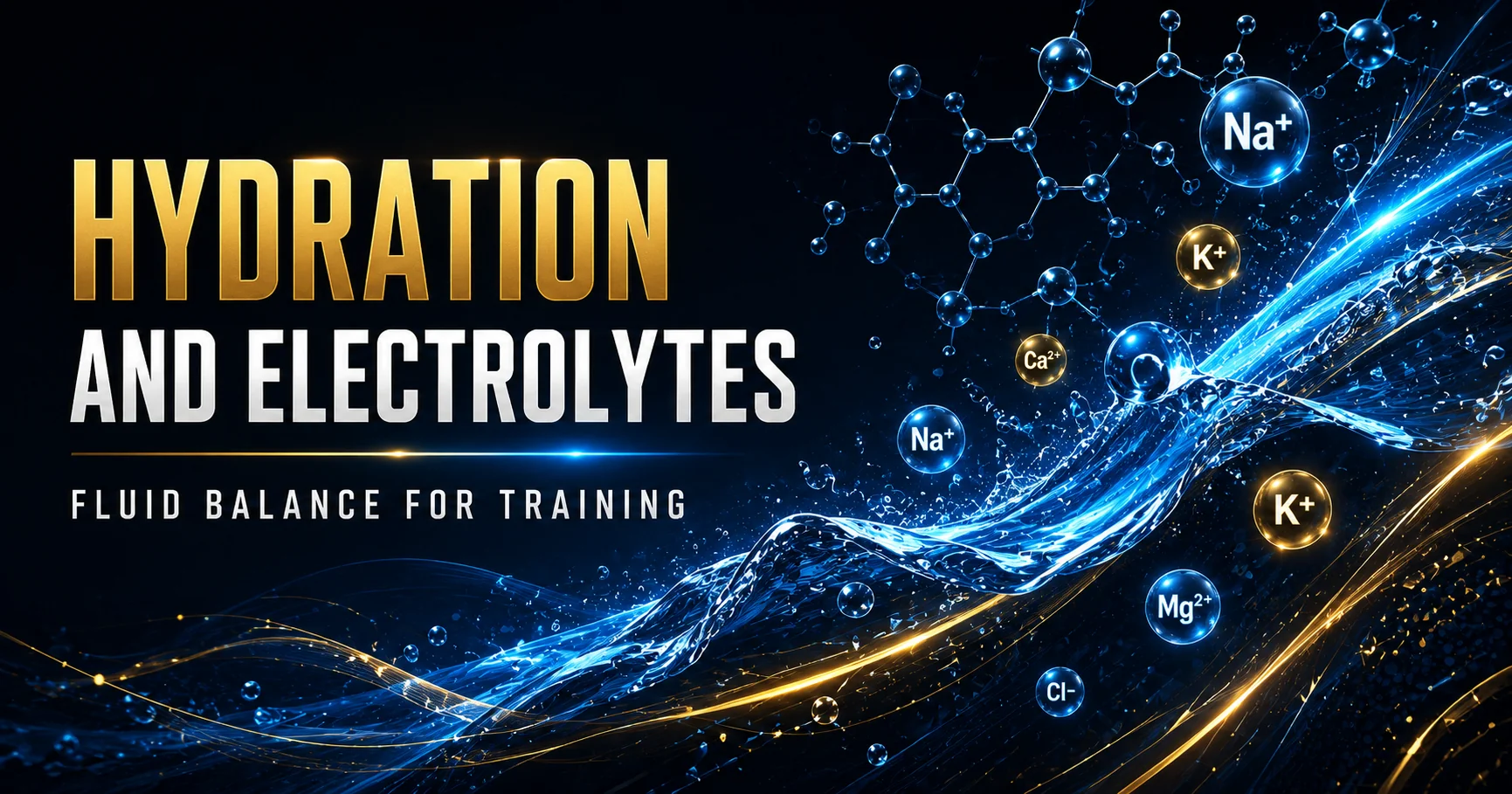
Hydration and Electrolytes: Why Fluid Balance Matters for Training
Hydration is often treated as simple: drink more water. But for athletes, lifters, and active individuals, hydration is more than fluid intake alone.
Training can increase sweat loss, heat stress, and fluid demands. When that happens, the body does not only lose water. It may also lose electrolytes, especially sodium, along with smaller amounts of potassium, magnesium, calcium, and other minerals.
That is why a smart hydration strategy is not just about drinking water. It is about supporting fluid balance before, during, and after training.
What Hydration Actually Supports
Hydration affects how the body manages training stress.
Fluid balance plays a role in:
- Temperature regulation
- Sweat production
- Circulation
- Muscle function
- Nerve signaling
- Perceived effort
- Training consistency
- Recovery between sessions
When hydration is overlooked, training can feel harder than expected. Energy may feel lower, heat may feel more difficult to manage, and recovery between sessions may be less consistent.
Hydration does not guarantee better performance by itself, but poor hydration can make good training harder to execute.
Why Electrolytes Matter
Electrolytes are minerals that carry an electric charge when dissolved in fluid. They help support normal fluid balance, muscle contraction, and nerve function.
Common electrolytes include:
- Sodium
- Potassium
- Magnesium
- Calcium
- Chloride
Sodium is especially important during training because it is the primary electrolyte lost in sweat. The amount lost varies widely from person to person.
Some athletes are light sweaters. Others lose large amounts of fluid and salt during a single session. Training environment, workout duration, body size, clothing, heat, humidity, and individual sweat rate all matter.
Water Alone Is Not Always Enough
For short, low-sweat workouts, water may be enough.
But water alone may not fully address hydration needs when training involves:
- Long duration
- High sweat loss
- Hot or humid conditions
- Multiple sessions per day
- Endurance training
- Outdoor training
- Heavy conditioning work
- Frequent cramping or salt marks on clothing
- Large changes in body weight after training
In these cases, an electrolyte strategy may be useful.
This does not mean everyone needs electrolytes all day. It means the hydration plan should match the training situation.
Before Training: Start Prepared
Hydration should not begin halfway through a workout. Starting training already under-hydrated can make the session feel harder.
A practical pre-training approach includes:
- Drinking fluids consistently throughout the day
- Paying attention to urine color and thirst
- Considering electrolytes before long or sweaty sessions
- Avoiding excessive alcohol before training days
- Being mindful of high-caffeine intake if it affects your routine
- Planning ahead for hot environments
The goal is not to overdrink. The goal is to start training in a reasonable hydration state.
During Training: Match the Session
Hydration during training should depend on the workout.
For short sessions, sipping water may be enough. For longer or sweat-heavy sessions, fluids plus electrolytes may be more appropriate.
Useful questions include:
- How long is the session?
- How much do I usually sweat?
- Am I training in heat or humidity?
- Will I train again soon?
- Do I feel performance drop late in sessions?
- Do I often finish workouts feeling depleted or unusually thirsty?
The longer and sweatier the session, the more important hydration planning becomes.
After Training: Replace What Was Lost
Post-training hydration is about replacing losses and supporting recovery.
A simple way to think about it:
- Water helps replace fluid.
- Electrolytes help support fluid balance.
- Food helps provide minerals, carbohydrates, protein, and overall recovery nutrition.
After a demanding session, especially one involving sweat loss, it may be useful to include fluids, electrolytes, and a balanced meal or snack.
Recovery is not just one product or one habit. Hydration works best as part of a broader routine that includes nutrition, sleep, and training management.
Signs You May Need a Better Hydration Strategy
Hydration needs vary, but these signs may suggest your current approach needs review:
- You frequently feel very thirsty after training
- You lose noticeable body weight during workouts
- You see salt marks on clothing or hats
- Training feels harder in heat
- You often experience headaches after sweaty sessions
- You feel unusually drained after conditioning or endurance work
- You struggle to recover between sessions
- You cramp often during or after training
These signs are not a diagnosis, and they can have multiple causes. But they are useful prompts to evaluate hydration habits.
Hydration Is Personal
There is no single hydration plan that works for everyone.
Two athletes can perform the same workout and have very different sweat rates, electrolyte losses, and recovery needs.
Factors that influence hydration needs include:
- Body size
- Sweat rate
- Training intensity
- Training duration
- Temperature and humidity
- Clothing and equipment
- Diet
- Fitness level
- Acclimation to heat
- Daily fluid intake
A good hydration plan is practical, repeatable, and matched to the person’s training environment.
Where Supplements Can Fit
Hydration and electrolyte supplements can be useful when they solve a real problem.
They may help when plain water is not enough for the training context, especially during long, hot, or high-sweat sessions.
A smart electrolyte product should be evaluated by:
- Electrolyte profile
- Sodium content
- Serving size
- Sugar or carbohydrate content, if any
- Flavor and ease of use
- Fit with the training session
- Label directions and warnings
The goal is not to use more. The goal is to use the right tool when the situation calls for it.
Practical Hydration Checklist
Before your next training session, ask:
- Am I starting the session reasonably hydrated?
- Will this workout be long, hot, intense, or sweat-heavy?
- Do I need fluids during training?
- Do I need electrolytes, especially sodium?
- Will I train again soon and need better recovery support?
- Am I relying on thirst alone when conditions are demanding?
- Does my hydration plan match my actual training environment?
This simple checklist can help make hydration more intentional.
Final Thought
Hydration is not just about drinking water. It is about supporting fluid balance in the context of training, sweat loss, heat, recovery, and performance demands.
For some sessions, water is enough. For others, electrolytes may play a useful role.
The best hydration strategy is not complicated. It is consistent, practical, and matched to the work being done.